

As astronomers proceed to look deeper into the cosmos due to new applied sciences just like the James Webb Area Telescope, deep space has by no means felt nearer.
Nonetheless, a two-dimensional picture is not fairly like getting the prospect to rise up shut and private with the various wondrous objects unfold out all through the universe. For many individuals, together with the visually impaired, with the ability to maintain a bodily object in a single’s hand is one of the simplest ways to study it. Now that 3D printers have develop into smaller and extra reasonably priced than ever earlier than, the power to print and maintain and study almost something is inside attain for a lot of of us.
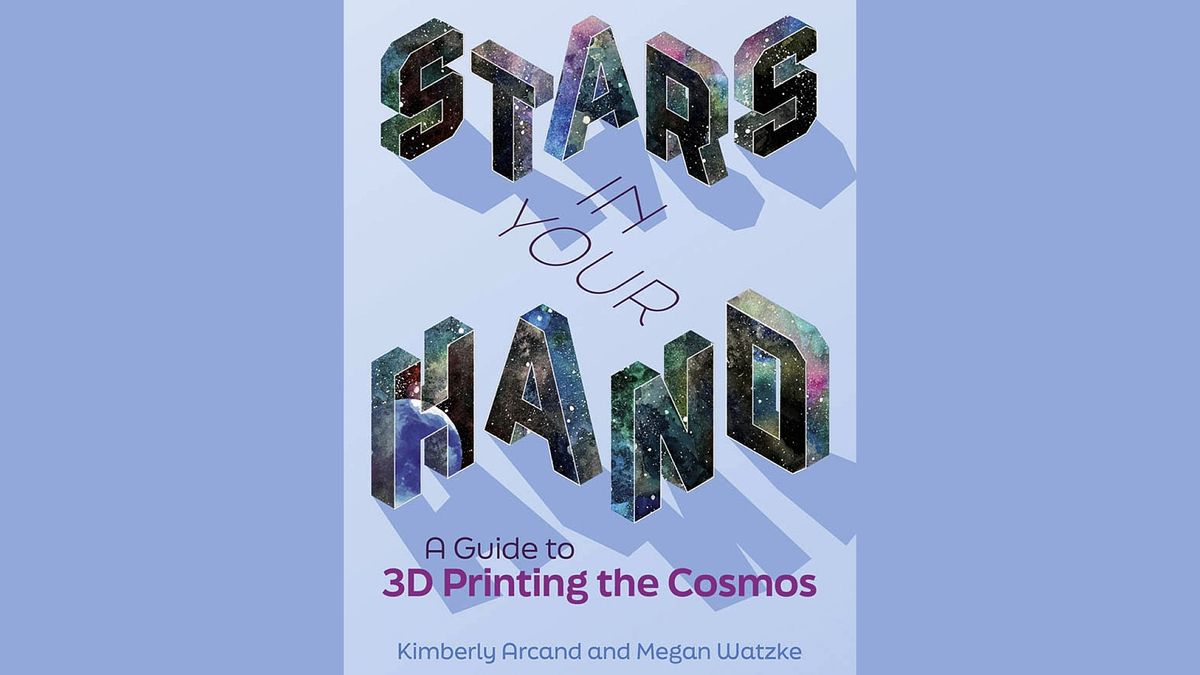
That now contains space. To assist put the celebs actually within the arms of curious learners all over the place, authors Kimberly Arcand and Megan Watzke of NASA’s Chandra X-ray Observatory mission wrote the upcoming ebook “Stars in Your Hand: A Information to 3D Printing the Cosmos,” which might be launched by MIT Press on Sept. 20.
The next dialog has been edited for size.
Associated: Best 3D printers 2022: FDM & resin printers to help you create at home
Area.com: How did you get the thought for the ebook?
Kimberly Arcand: I first began being all in favour of 3D printing, like, a minimum of a dozen years in the past, I would say. I’ve some colleagues on the Smithsonian that had been simply beginning to work on some 3D printing. They usually type of took me beneath their wing. They had been engaged on 3D modeling and printing President Obama’s head on the time. And I believed that was fairly darn cool. If they may do this, like, certainly we may work out 3D print stars. In order that was type of the impetus to seeing different individuals use it in different areas. After which some alternatives got here alongside in our day job to have the ability to work with some 3D mannequin knowledge, and we simply had a go at it. And ever since then, it is type of taken on a significant pillar of accessibility for me, that it is actually vital to have the ability to expertise knowledge and new means, new strategies with the intention to simply present totally different sorts of learners with totally different sorts of alternatives.
Area.com: I perceive that the ebook was written as a aspect undertaking aside out of your duties at NASA, however are you able to inform us a bit about what sort of 3D printing you do at Chandra?
Arcand: Chandra actually was the inspiration for me doing my first 3D prints by myself. And that was as a result of we had labored with a very cool scientist, Tracy Delaney, who had modeled [the supernova remnant] Cassiopeia A in three dimensions utilizing Chandra knowledge, Spitzer [Space Telescope] knowledge and a few ground-based optical knowledge. And I simply thought that mannequin was unbelievable.
Like, I would been Cassiopeia A in two dimensions for eternally; it was the primary bit of information I ever labored on from Chandra, the primary picture that Chandra launched only a tiny little bit, like one-hour remark, and to quick ahead greater than a dozen years to be engaged on it in three dimensions — it simply appeared like a very fascinating alternative to push that envelope much more. So to get it out of the pc display and put it into any individual’s hand could be a really cool alternative for individuals to have the ability to entry this knowledge that I had entry to, that Megan may entry, , that scientists may entry. However we wished extra individuals to have the ability to entry it. And that simply sort of began me on a little bit of a stretch of attempting to determine what different datasets would actually work nicely in 3D and the way we may do this.
(opens in new tab)
It is difficult knowledge. Not each bit of information goes to be that top decision and have that a lot info on, , of the lights shifting away, and what’s shifting towards. So we have type of checked out a bigger space of 3D modeling and 3D printing since so what can we have a look at so far as tactile plates, that are primarily like reduction maps that present three dimensional knowledge in a unique sort of means.
Megan Watzke: I believe that the 3D stuff is known as a method to do one thing totally different, . It isn’t simply your conventional “here is a flat picture, have a look at it, find it irresistible, transfer on” sort of factor. And as a lot as we love pictures, you run up in opposition to the identical drawback in astronomy. Now, till very not too long ago, once you had individuals trying on the sky from the bottom for millennia, you simply could not work out, cannot contact it, you may’t really feel it, you may’t choose it up and chew it like you could possibly like a rock or one thing and work out, What’s it made out of? So I believe that the thought of with the ability to add this new, this third dimension, to these objects which have fascinated individuals for therefore lengthy, was actually enticing.
And it is only a means to have a look at it in another way, not only for blind and low imaginative and prescient communities, which clearly, that is an important end result, however for anybody who simply sort of thinks in another way, likes to expertise issues in only a non-visual means. After which I believe that features most individuals. I believe simply you get various things out of it, irrespective of who you might be, in case you can maintain one thing in your hand. In order that was sort of one among our motivators right here.

(opens in new tab)
Area.com: For whom did you write the ebook? Who do you need to purchase this ebook and go and print these items?
Arcand: Effectively, I’d say there’s fairly a number of viewers members. In my thoughts, the primary viewers might be makers of any variety, clearly; learners are falling into that class, too. However the concept that this might be helpful for individuals who wish to make and tinker is admittedly, actually enticing. I believe it is at all times a purpose of mine and Megan’s to have the ability to open up new little pockets of alternative for people who find themselves not essentially already enmeshed in in astrophysics, proper, {that a} ebook like this is perhaps enticing to somebody who’s maybe a maker, however not essentially an enormous astronomy fan. And maybe vice versa, this is perhaps enticing to any individual who’s an astronomy fan who’s by no means accomplished any making and want to, due to the chance to make a few of these issues for themselves. However I believe in my head, I’ve type of pictured it as a very cool alternative for maker areas, neighborhood areas, libraries and faculties.
LOOKING FOR A 3D PRINTER?
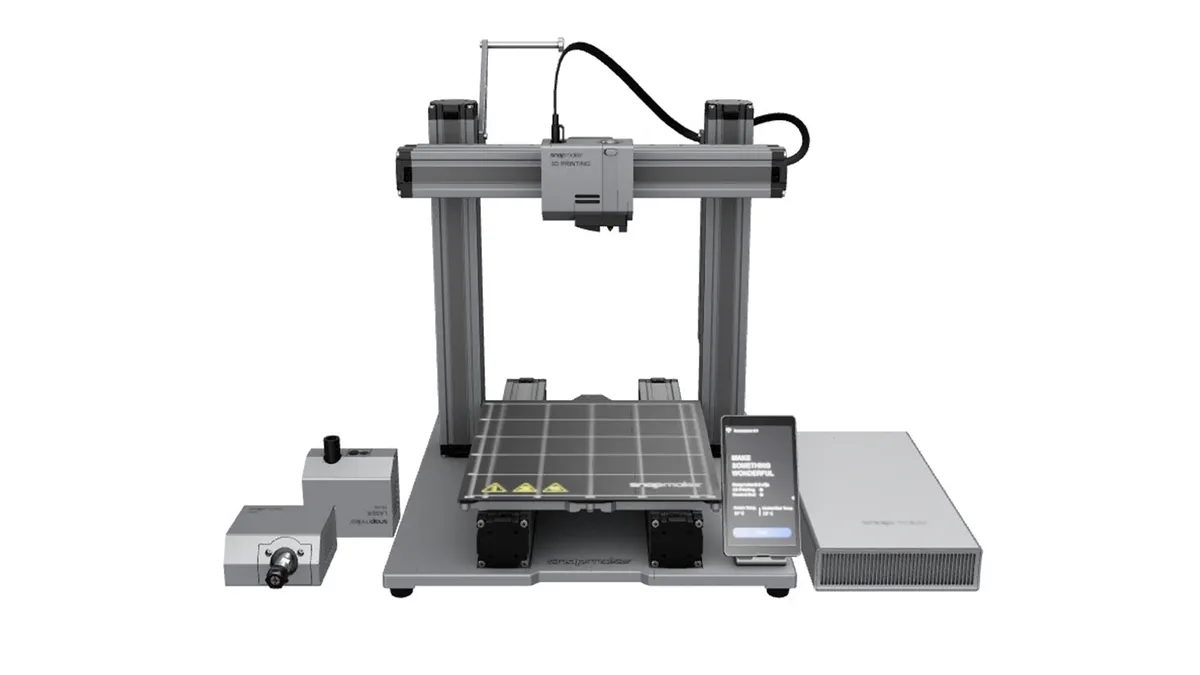
Prepare for 3D printing at dwelling with this large $350 saving on the Snapmaker A350 T 3-in-1 3D printer (opens in new tab).
Watzke: I at all times wish to suppose: what if somebody is aware of nothing, they usually’re selecting this ebook up, , not essentially about this subject and picks this ebook up? Can they entry the knowledge in a means that is, , helpful? I hope so. That was type of our purpose. So, , actually, that is a really broad reply — that we would like everybody to choose it up — however we do not need to be gatekeeping with our widespread books, we would like individuals to really feel like, “OK, I do not know something about this. I am not intimidated, and I can choose it up and get one thing out of it.”
Area.com: I can inform you that after I printed my lunar floor mannequin right here, my youngsters had been fascinated by it. After which my four-year-old daughter requested me, “the place did all of the holes come from?” And so then that led into slightly dialog about lunar heavy bombardment. As a result of they’re tremendous all in favour of space, however , they’re youngsters, they need to choose stuff up and contact it. I believe this ebook could possibly be a very cool studying expertise for them.
Watzke: Yeah, and simply going again to the viewers, I believe 3D printing is at this precipice, proper? Like some individuals have it, some organizations have it privately or in a neighborhood setting, and I am undecided if there is a ton of content material. So hopefully, this contributes in a enjoyable means.
We at all times discover that astronomy may be very, as you guys know, it is a very welcoming science. There’s not numerous politics concerned. And virtually everybody’s fascinated with what’s on the market. So I imply, it is a method to type of get individuals engaged, I believe, whether or not it is the know-how or the topic or no matter, together with youngsters.

(opens in new tab)
Area.com: The place did you discover all of the fashions within the ebook? Are all of them open supply?
Arcand: Just about every little thing on this ebook is a Inventive Commons or public area sort of undertaking, as a result of these are all individuals which have been engaged on creating these kind of initiatives for the higher good, if you’ll. Collaborators who work on creating constellations which might be tactile are normally doing these issues as a result of they’re attempting to fill a necessity, if you’ll. So it has been actually thrilling to have the ability to curate an inventory of those alternatives, and to have so many of us which have been engaged on one of these 3D modeling and printing and pull all of it collectively into one reference ebook.
Watzke: We tried to make this clear within the ebook, however we did not make all these fashions. Kim specifically has labored on 3D modeling for, , as she mentioned, a very long time, however that is extra of an combination of all that we discovered that was on the market on the time. After all, it may be ever evolving. And there are different fashions on the market. However we did attempt to discover those that had been, , funded by NASA or different public entities.
Area.com: If there’s one takeaway that you just hope a reader will get out of your ebook, what wouldn’t it be?
Arcand: I believe, to be trustworthy, the takeaway I hope individuals have is probably one that’s not essentially up entrance within the ebook, however simply what I discovered again and again from initiatives that discover knowledge by way of these totally different modalities, these totally different dimensions, is that oftentimes individuals begin to perceive that different individuals discover issues in numerous methods. So I believe there’s part of me that sort of hopes individuals begin to perceive that we will study issues in numerous methods, that folks entry knowledge in numerous methods, that there is simply totally different worth and meaning-making from, on this case, 3D printing or 3D modeling one thing.
Watzke: I believe now we have an total underlying theme that we at all times hope comes by way of, which is that space and the universe is for everybody to find and expertise. Too typically, I really feel like individuals suppose, “Oh, science is not fairly for me” or “I am not a science individual” or no matter which means. We would like anybody to really feel like science is one thing they’ll uncover, space is one thing they’ll get pleasure from and expertise in the event that they’re all in favour of it. And possibly they do not even know they’re all in favour of it, as a result of they have not felt welcome. So, , if it is a drop in that bucket, then that is nice. It is simply type of a factor we have tried to emphasise through the years, not that we do not need individuals who already love space to purchase the ebook. As a result of, there are such a lot of hardcore astronomy followers on the market. And we admire their curiosity in this sort of stuff. However we’re at all times attempting to make a much bigger science tent for individuals to really feel welcome.
‘Stars in Your Hand: A Guide to 3D Printing the Cosmos (opens in new tab)‘ by The MIT Press might be launched on Sept. 20.
Comply with Brett on Twitter at @bretttingley (opens in new tab). Comply with us on Twitter @Spacedotcom (opens in new tab) or on Facebook (opens in new tab).