


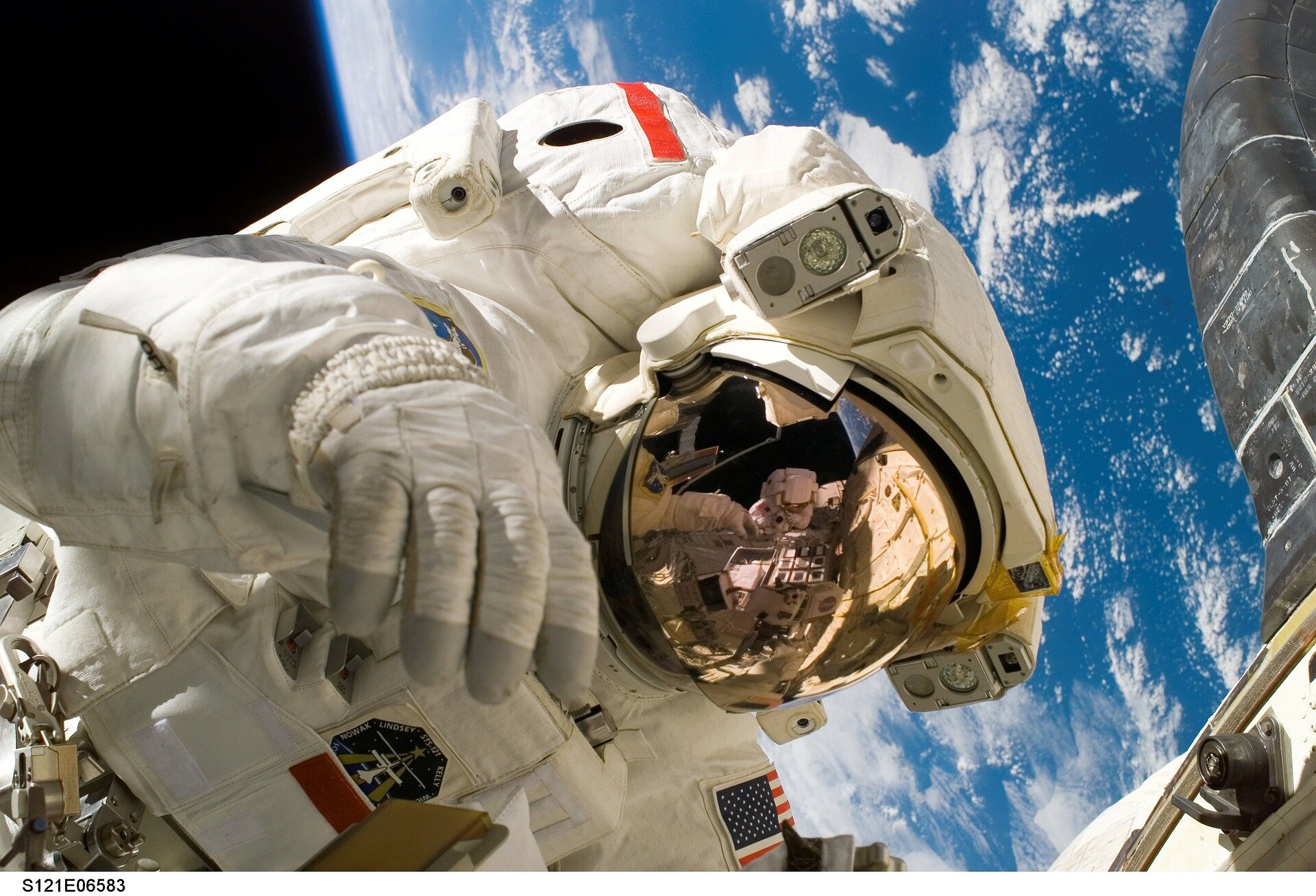
If space is the ultimate frontier, it is meals that can get us there in good condition, and UBC researchers are ensuring that our meals will likely be as much as the duty.
Dr. John Frostad, an assistant professor in chemical and biological engineering who research the science of meals, leads a crew that’s creating new methods of encapsulating omega-3 fatty acids in order that they will go the gap.
Omega-3 is crucial to psychological sharpness. Even a few days with out omega-3 in our diets might boring our brains and have us feeling lower than our greatest. Nevertheless, our our bodies can not produce it naturally so we should discover it within the meals we eat, similar to fish, flaxseed, or usually by taking dietary supplements.
“For astronauts and others on space missions, the tough half is guaranteeing that omega-3 stays recent and viable in no matter type—capsules or liquid—it’s saved in,” explains Dr. Frostad.
“The shelf lifetime of most omega-3 capsules is round two years, however space missions can go for longer than that and so they have to be self-sufficient. You may’t do a grocery run each couple of months. Research additionally present that expired omega-3 dietary supplements can have carcinogenic properties, so the stockpiles that you simply do have ought to keep at their very best.”
Starches and nanocellulose crystals present early promise
There are at present no surefire methods of preserving omega-3s for longer than two years however the Frostad crew thinks they’ve some fairly good contenders.
A present strategy they’re testing, in live performance with components producer Ingredion, is to encapsulate the omega-3s in quinoa powder.
“Probably, we might embed the important fatty acids in quinoa starch to create one thing you can mix right into a smoothie,” notes Cody Rector, a graduate pupil within the Frostad lab who’s at present pursuing his grasp of science diploma in food science.
One other contender is cellulose nanocrystals (CNCs)—very tiny crystals derived from wooden fibers with uncommon properties that make them able to stabilizing mixtures of oil and water.
“CNCs might one day be used as a naturally sourced additive in emulsions that comprise omega-3’s or different important fatty acids,” says Dr. Roxanne Fournier, a postdoctoral researcher in meals science who research the consequences of spaceflight on organic methods and methods of bettering meals and diet for crewed spaceflight.
Creamy coffees in space
If the crew succeeds, their work might affect how fat are packaged into meals for space missions.
Dr. Fournier explains, “Meals that astronauts deliver into deep space usually have to be rehydrated, and the ensuing texture may be watery or mushy and never very good.”
As soon as meals producers can successfully package deal fats utilizing the methods the Frostad crew is growing, then fat may be added simply to meals to make creamy-tasting coffees and smoothies, for instance.
“Meals fatigue may be a difficulty for astronauts consuming uniform textures day in, day out,” says Dr. Frostad. “Correctly encapsulating omega-3s is not going to solely forestall malnutrition, it might probably additionally make future space diets extra tolerable and, properly, nicer to eat.”
Though NASA’s touted crewed Mars mission is the unique impetus for the analysis, Dr. Frostad and crew additionally sees potential functions proper right here on Earth.
“Elevated shelf life has clear benefits for customers who can safely retailer meals longer in addition to grocery stores that may inventory merchandise longer,” says Dr. Frostad. “The present battle in Ukraine has actually shaken provide chains for a lot of gadgets, so merchandise with longer shelf lives might assist reduce the unfavorable impacts of such occasions sooner or later.”
Supplied by
University of British Columbia
Quotation:
Meals science analysis might assist astronauts eat properly on future Mars missions (2022, November 10)
retrieved 10 November 2022
from https://phys.org/information/2022-11-food-science-astronauts-future-mars.html
This doc is topic to copyright. Other than any truthful dealing for the aim of personal research or analysis, no
half could also be reproduced with out the written permission. The content material is offered for data functions solely.